Grain storage: modern techniques to preserve quality
Grain storage represents a crucial phase in the agri-food supply chain, determining how the nutritional properties and quality of the products are kept intact. In this article, we will explore the cutting-edge techniques used by Pineta srl, a leading company in the cereal sector, to guarantee optimal storage and preserve the excellence of Italian grains.
The importance of grain storage in the agri-food industry
Grain storage is not simply an intermediate step between harvesting and processing, but a fundamental process that directly influences the quality of the final product. Correct storage allows the organoleptic and nutritional characteristics of the grains to remain unaltered, preventing the proliferation of molds, bacteria, and insects that could compromise their quality.
The crucial role of Pineta srl in the cereal sector
Pineta srl, with its fifty years of experience in the cereal sector, has established itself as a point of reference in the Agro di Cerignola, in Foggia. The company has successfully combined tradition and innovation, developing cutting-edge grain storage techniques that guarantee the highest quality of products.
Impact of storage on wheat quality
Grain storage directly influences the quality of wheat and, consequently, all derived products. Incorrect storage can lead to significant losses in terms of quality and quantity, with relevant economic repercussions for the entire supply chain. Pineta srl has understood the importance of this aspect, investing in technologies and practices that ensure optimal storage.
Advanced grain storage techniques
Modern grain storage techniques are based on an integrated approach that combines adequate structures, environmental control, and constant monitoring. Let's look in detail at how Pineta srl applies these techniques to ensure maximum cereal quality.
State-of-the-art silos and storage structures
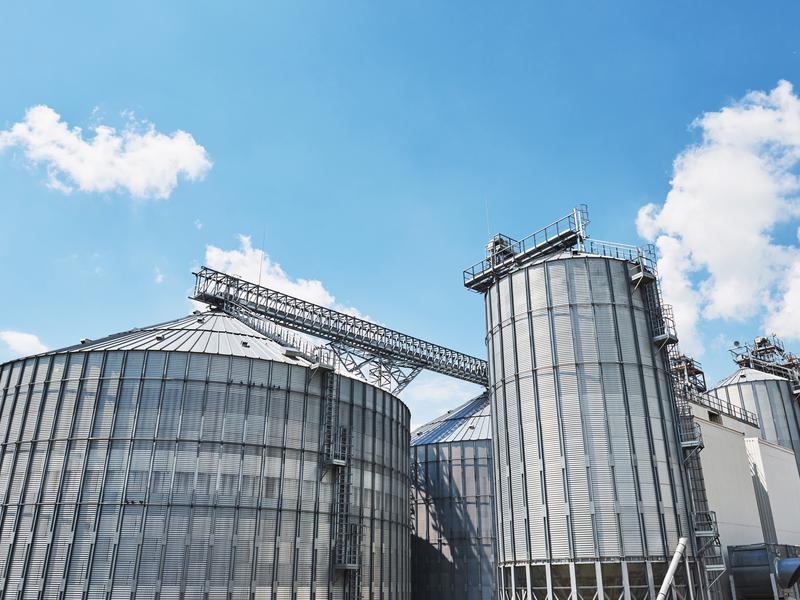
The silos used by Pineta srl represent the state of the art in grain storage. Built with innovative materials and equipped with special coatings, these silos offer optimal protection against atmospheric agents and pests. Their capacity of 21,600 tons allows the management of large quantities of grain while maintaining high quality standards.
Temperature and humidity control
The control of temperature and humidity is fundamental to prevent mold formation and insect proliferation. Pineta srl uses advanced monitoring systems that allow the maintenance of ideal environmental conditions inside the silos. Strategically distributed sensors detect any variations in real time, allowing for timely interventions.
Aeration and ventilation systems
Adequate aeration is essential to maintain grain quality during storage. The ventilation systems implemented by Pineta srl ensure a constant and controlled airflow, which prevents the formation of moisture pockets and keeps the temperature uniform inside the silos.
Pest prevention and management in grain storage
The fight against pests is one of the main challenges in grain storage. Pineta srl adopts a preventive and integrated approach to protect grains from infestations that could compromise their quality.
Integrated monitoring and preventive treatments
The company has implemented a constant monitoring system that uses traps and sensors to detect the presence of insects early. This allows for timely intervention with targeted treatments, minimizing the use of pesticides and preserving grain quality.
Ecological solutions for grain protection
In line with growing attention to sustainability, Pineta srl is experimenting with ecological solutions for grain protection. These include the use of natural predators and plant-based repellents, which offer an effective and environmentally friendly alternative to traditional chemical treatments.
Traceability and quality management in storage
Traceability is a fundamental aspect to guarantee the quality and safety of grains. Pineta srl has invested in advanced systems that allow for the monitoring of every phase of the storage process.
Advanced traceability systems
Thanks to the implementation of RFID and blockchain technologies, Pineta srl is able to trace every batch of grain from the field to the silo. This not only guarantees maximum transparency but also allows for prompt intervention in case of problems, isolating any contaminated batches.
Quality controls during storage
Throughout the storage period, Pineta srl carries out regular quality controls on the grains. Samples are taken and analyzed to verify parameters such as humidity, presence of mycotoxins, and protein quality. These controls ensure that the cereals maintain their optimal characteristics until the moment of processing.
Technological innovations in grain storage
The grain storage sector is undergoing a true technological revolution. Pineta srl is at the forefront of adopting innovative solutions that improve the efficiency and quality of the storage process.
Process automation and digitalization
Automation has transformed grain storage, making processes more efficient and precise. Pineta srl uses automated systems for loading and unloading silos, reducing the risk of human error and optimizing space usage. Digitalization also allows for continuous, real-time monitoring of all storage parameters.
Artificial intelligence applied to storage
Artificial intelligence is opening new frontiers in grain storage. Pineta srl is experimenting with machine learning algorithms to predict optimal storage conditions based on grain characteristics and environmental conditions. This predictive approach allows for early detection of potential problems and optimization of silo management.
Sustainability in grain storage
Sustainability has become an imperative in the agri-food sector, and grain storage is no exception. Pineta srl has adopted several measures to make the storage process more sustainable and eco-friendly.
Waste reduction and resource optimization
Thanks to accurate flow management and the use of advanced technologies, Pineta srl has managed to significantly reduce waste in grain storage. The optimization of spaces and processes has allowed for increased energy efficiency and reduced the environmental impact of storage operations.
Renewable energy in storage facilities
Pineta srl has invested in the installation of solar panels on silo roofs, using solar energy to power ventilation and control systems. This not only reduces energy costs but also contributes to decreasing the company's carbon footprint.
The future of grain storage: challenges and opportunities
The grain storage sector is constantly evolving, and Pineta srl is preparing to face future challenges with a proactive and innovative approach.
Adaptation to climate change
Climate change represents a significant challenge for grain storage. Pineta srl is studying solutions to adapt storage techniques to increasingly extreme weather conditions, investing in resistant structures and even more sophisticated environmental control systems.
Evolution of regulations and quality standards
Regulations regarding food safety and grain quality are constantly evolving. Pineta srl stays up to date, adapting its storage practices to the highest standards and actively participating in working groups for the development of new guidelines in the sector.
Conclusions: excellence in grain storage by Pineta srl
Grain storage is an art that requires experience, knowledge, and continuous innovation. Pineta srl, with its cutting-edge approach and constant attention to quality, confirms itself as a point of reference in the Italian cereal sector. The modern storage techniques implemented by the company not only preserve grain quality but also contribute to ensuring food safety and the sustainability of the supply chain.
Thanks to the commitment of companies like Pineta srl, the future of grain storage looks full of opportunities. The integration of advanced technologies, attention to sustainability, and the continuous search for innovative solutions will allow us to face future challenges, ensuring that Italian cereals maintain their renowned quality from the field to the table.
FAQ on grain storage
- How long can cereals be preserved in a modern silo? With the advanced storage techniques used by Pineta srl, grains can be stored in optimal conditions for periods ranging from 12 to 18 months, keeping their nutritional and qualitative properties intact.
- What are the main risks in grain storage and how are they prevented? The main risks include insect infestations, mold growth, and variations in temperature and humidity. Pineta srl prevents these risks through constant monitoring, advanced aeration systems, and ecological preventive treatments.
- How does grain storage affect the quality of the final product? Correct storage preserves the organoleptic and nutritional characteristics of the grains, ensuring that the final product (such as pasta or bread) maintains high quality and food safety.
- What are the most recent innovations in grain storage? The most recent innovations include the use of artificial intelligence for predictive management, blockchain-based traceability systems, and the implementation of solutions for energy efficiency and sustainability.
- How is grain storage adapting to climate change? Pineta srl is investing in more resistant structures, advanced environmental control systems, and adaptive preservation techniques to cope with the challenges posed by climate change and guarantee grain quality in increasingly variable conditions.